
In the intricate landscape of business agreements, the decision to terminate a contract is never taken lightly. Whether due to unforeseen circumstances, changing priorities, or contractual breaches, ending a contractual...


In the intricate landscape of business agreements, the decision to terminate a contract is never taken lightly. Whether due to unforeseen circumstances, changing priorities, or contractual breaches, ending a contractual relationship requires careful consideration and adherence to legal and ethical principles. In this comprehensive guide, we explore the nuances of contract termination, offering insights into the legal framework, ethical considerations, and best practices for navigating this complex process.
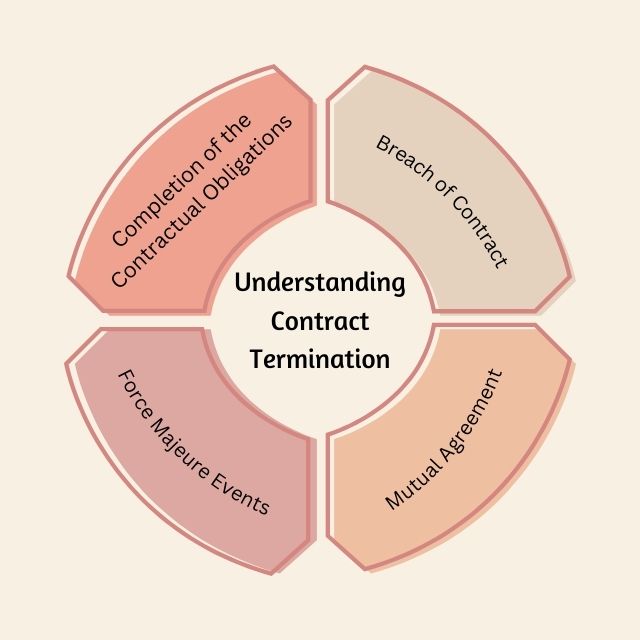
Before delving into the intricacies of contract termination, it’s essential to understand the various scenarios that may warrant such action. Contracts can be terminated for numerous reasons, including:
Read More: How to Get Out of a Contract
When considering contract termination, it’s crucial to adhere to the legal framework governing such actions. Key legal considerations include:
Read More: Revocation of Contracts
In addition to legal requirements, ethical considerations play a significant role in contract termination. Some ethical guidelines to keep in mind include:
Also Read: How to Handle Contract Terminations
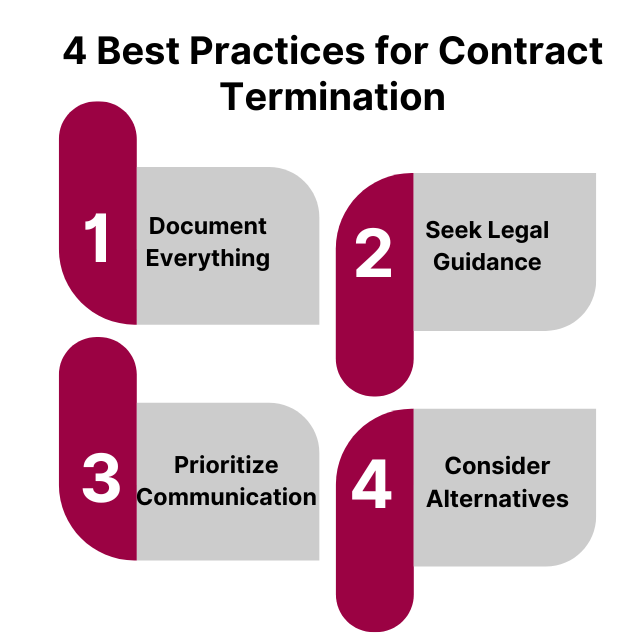
To navigate the process of contract termination effectively, consider the following best practices:

Terminating a contract is a complex process that requires careful consideration of legal, ethical, and practical factors. By understanding the legal framework, adhering to ethical principles, and following best practices, businesses can navigate contract termination with integrity and professionalism, safeguarding their interests and preserving valuable relationships in the process. At Legitt AI, we are committed to empowering businesses with the knowledge and tools they need to navigate the complexities of contract management effectively.
Read More: What is a Contract Clause
Did you find this Legitt article worthwhile? More engaging blogs about smart contracts on the blockchain, contract management software and electronic signatures can be found in the Legitt Blogs section. You may also contact Legitt to hire the best contract lifecycle management services and solutions.
Consider reviewing the contract terms, complying with termination clauses, providing adequate notice, and mitigating damages to minimize legal risks and ensure compliance with legal requirements.
Ethical considerations ensure fairness, transparency, and professionalism throughout the termination process, fostering positive relationships and preserving trust between parties involved in the contract.
Document all communications and actions, seek legal guidance, prioritize open communication, and explore alternative dispute resolution methods to navigate contract termination effectively and minimize conflicts.
Foster open and transparent communication with the other party, addressing concerns and exploring potential solutions collaboratively to facilitate a smooth and respectful termination process.
Legal guidance helps ensure compliance with relevant legal requirements, minimizes legal risks, and provides clarity on legal rights and obligations during the contract termination process.
Detailed documentation of all communications, agreements, and actions related to the termination process helps protect against potential disputes and provides evidence of compliance with legal and ethical standards.
Take proactive measures to minimize financial losses and mitigate damages for both parties involved, such as exploring alternative solutions and negotiating fair resolutions.
If the other party breaches the contract, review the contract terms, consider legal remedies available, and explore options for resolution, such as negotiation, mediation, or legal action.
Maintain professionalism by conducting yourself with integrity, respecting the other party, refraining from personal attacks, and focusing on finding mutually beneficial solutions to the termination process.
Prioritize open and transparent communication, treat the other party with fairness and respect, and explore opportunities for collaboration or future partnerships to preserve positive relationships despite contract termination.