
Contract management is a critical skill in today’s business world, essential for ensuring that agreements are effective, compliant, and beneficial to all parties involved. Whether you are a small business...


Contract management is a critical skill in today’s business world, essential for ensuring that agreements are effective, compliant, and beneficial to all parties involved. Whether you are a small business owner, a corporate executive, or a legal professional, understanding the intricacies of contract management can significantly impact your organization’s success. This article provides a comprehensive guide of 1500 words on essential tips for effective contract management.
Contract management involves overseeing the creation, execution, and analysis of contracts to maximize operational and financial performance, while reducing risks. It’s not just about drafting a contract but about ensuring its performance meets the agreed standards and expectations.
Contract management is a critical process in business operations, encompassing various stages from drafting to compliance. Each stage plays a vital role in ensuring the contract is effective, fair, and legally sound.
Effective contract management is a multi-faceted process requiring attention to detail, strategic negotiation, diligent execution, and rigorous compliance. Mastering these aspects can significantly contribute to the success and stability of business relationships.
Effective contract management is a crucial aspect of business operations, influencing both the immediate and long-term success of organizational activities. Implementing key strategies and practices in managing contracts can greatly enhance efficiency and reduce risks. Here are essential tips for effective contract management:
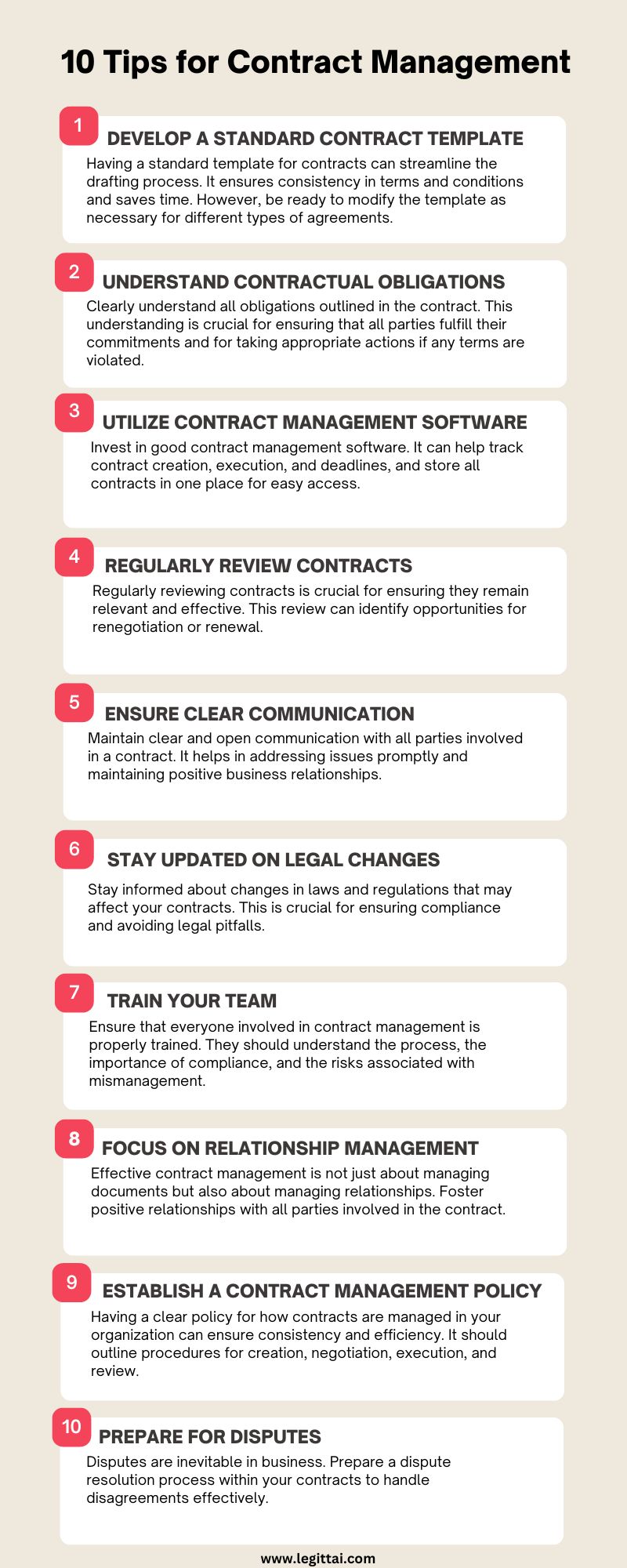
Creating a standard contract template can significantly streamline the drafting process. It ensures consistency in terms and conditions across different agreements and saves valuable time. However, flexibility is key – be prepared to modify the template to suit the specific needs of different types of agreements and partnerships.
A thorough understanding of all the obligations outlined in the contract is essential. This deep comprehension is key to ensuring that all parties fulfill their commitments. It is also critical for identifying and responding appropriately if any terms are breached.
Investing in robust contract management software can revolutionize how you handle contracts. Such systems aid in tracking the creation, execution, and deadlines of contracts and provide a centralized repository for easy access and management of all contractual documents.
Consistent review of existing contracts is vital. This practice helps in ensuring that the agreements remain relevant and beneficial. Regular reviews can also identify opportunities for renegotiation, updates, or renewal, keeping the contracts aligned with changing business goals or market conditions.
Maintaining clear, transparent, and open communication with all parties involved in a contract is critical. Effective communication facilitates timely resolution of issues and helps in maintaining positive, productive business relationships.
Staying informed about legal changes and updates that could impact your contracts is essential for compliance. This knowledge helps in avoiding legal issues and ensures that your contracts are always aligned with current laws and regulations.
Ensure that all team members involved in contract management are adequately trained. They should understand the importance of compliance, the intricacies of the contract management process, and the risks associated with mismanagement.
Contract management extends beyond paperwork to include managing relationships. Fostering positive and cooperative relationships with all entities involved in a contract is key to smooth operations and conflict resolution.
Implementing a clear contract management policy in your organization promotes consistency and efficiency. This policy should detail the procedures for creating, negotiating, executing, and reviewing contracts, providing a standardized approach across the organization.
Disputes in business are almost inevitable. It’s important to prepare for these scenarios by incorporating a dispute resolution process within your contracts. This can include mediation or arbitration clauses, providing a structured approach to resolving disagreements effectively.

Mastering the art of contract management involves a combination of strategic planning, clear communication, technological support, and continuous learning. By adhering to these tips, businesses can ensure their contracts are not only legally compliant but also conducive to building strong, enduring business relationships.
Effective contract management is a dynamic and ongoing process. By following these essential tips and continuously adapting to the changing business environment, organizations can ensure that their contracts are not only compliant and effective but also contribute to the overall success and growth of the business. Remember, in the world of contracts, vigilance, and adaptability are the keys to success.
Did you find this Legitt article worthwhile? More engaging blogs about smart contracts on the blockchain, contract management software and electronic signatures can be found in the Legitt Blogs section. You may also contact Legitt to hire the best contract lifecycle management services and solutions.
A standard contract template ensures consistency and efficiency. It saves time by providing a reliable framework for common terms and conditions, though it should be adaptable for different agreements.
Understanding obligations ensures all parties fulfill their commitments and allows for proper responses to any breaches, maintaining the contract's integrity.
Contract management software streamlines tracking, execution, and storage of contracts. It offers organized access and helps monitor deadlines and compliance.
Regular reviews keep contracts relevant and effective. They allow for adjustments in response to business changes, identifying renegotiation or renewal opportunities.
Clear communication is crucial for addressing issues quickly and maintaining healthy business relationships. It helps clarify expectations and resolve misunderstandings.
Staying informed about legal changes ensures contracts remain compliant with current laws, avoiding legal pitfalls and maintaining validity.
Training equips the team with knowledge about compliance, process understanding, and risk awareness, essential for effective contract management.
Contract management isn't just about documents; it's about fostering positive relationships with all parties, which is key for smooth contract execution.
A contract management policy should outline standardized procedures for creation, negotiation, execution, and review, ensuring consistency and efficiency.
Disputes are common in business. Being prepared with a resolution process in contracts facilitates effective and structured handling of disagreements.