
In the complex and multifaceted world of business, bilateral contracts stand as a cornerstone, underpinning a vast array of commercial transactions and relationships. These agreements, characterized by mutual promises and...


In the complex and multifaceted world of business, bilateral contracts stand as a cornerstone, underpinning a vast array of commercial transactions and relationships. These agreements, characterized by mutual promises and obligations between two parties, are the most prevalent and essential form of contract in the business landscape. They serve as the foundational building blocks of modern commerce, facilitating exchanges, delineating responsibilities, and ensuring the smooth operation of business activities across various sectors. This in-depth article seeks to unravel the intricacies of bilateral contracts, offering a comprehensive exploration of their various aspects. It begins by defining what constitutes a bilateral contract, highlighting its key features and what sets it apart from other types of contracts, such as unilateral contracts.
The article then delves into the significance of these contracts in the commercial world, underscoring their role as a crucial element in almost every type of business transaction, from simple purchases to complex corporate agreements. The formation of bilateral contracts is discussed next, examining the legal requirements such as offer, acceptance, and consideration that underlie their creation. This is followed by an analysis of how these contracts are enforced and the legal remedies available in cases of breach, which is pivotal in ensuring that the agreements serve their intended purpose.
Lastly, the article addresses the evolving role of bilateral contracts in today’s dynamic and fast-paced business environment, where technological advancements and globalization are continuously reshaping the way business is conducted. This exploration provides valuable insights into the enduring importance and adaptability of bilateral contracts in the ever-changing landscape of global commerce.
In the complex world of legal agreements, bilateral contracts stand as the most widely recognized and utilized form, serving as the foundation for a myriad of commercial interactions. Understanding the definition and characteristics of these contracts is crucial for navigating the business environment effectively.
A bilateral contract is, at its core, an agreement based on a mutual exchange of promises between two parties. Each party in this type of contract commits to fulfilling certain obligations, with these commitments being contingent upon the reciprocal promises made by the other party. This mutual exchange is the defining feature of bilateral contracts, setting them apart from unilateral contracts, where a promise is exchanged for a specific act or performance. In bilateral contracts, the essence is a ‘promise for a promise’, creating a balanced structure of obligations and expectations.
For instance, in a sales contract, the seller promises to deliver goods, while the buyer promises to pay a specified amount. In an employment contract, the employer promises to pay the employee, who, in turn, promises to provide their labor. These are classic examples of the bilateral contract structure at work, with each party bound by the promises they make to each other.
Legal Foundations and Formation
The formation of a bilateral contract involves several foundational legal elements, each playing a crucial role in the contract’s validity and enforceability.
Essential Elements
Contractual Intent
For a bilateral contract to be legally binding, it must be established with the clear intent to create a contractual relationship. This intent is often inferred from the conduct and statements of the parties involved, as well as the context of the agreement. The terms of the contract must be specific, clear, and sufficiently detailed to allow for enforcement. Vague or ambiguous terms can lead to disputes and challenges in the enforcement of the contract.
The contractual intent also involves an understanding and agreement of the contract’s terms by both parties. This mutual understanding is essential for the contract to be considered valid and enforceable. In situations where there is a misinterpretation or miscommunication of the terms, the validity of the contract can be questioned.
Bilateral contracts are a critical component of the legal and commercial landscape, facilitating countless transactions and agreements across various sectors. Their structure, based on mutual promises, creates a framework of reciprocal obligations and rights that underpin many business dealings. Understanding the key features, legal foundations, and formation of bilateral contracts is essential for anyone engaged in commercial activities. As business interactions become increasingly complex and diversified, the importance and relevance of bilateral contracts continue to grow, solidifying their role as a cornerstone of commerce and trade.

In the world of business transactions and legal agreements, bilateral contracts stand as a pillar of commerce and cooperation. The enforcement of these contracts and the pursuit of remedies when a breach occurs are crucial aspects of maintaining the integrity of business dealings. A breach in a bilateral contract, which refers to the failure of one party to fulfill their contractual obligations, can vary in severity from minor (non-material) to major (material), significantly influencing the type of remedy pursued and the overall impact on the contractual relationship.
Breach of Contract
Types of Breaches
Remedies for Breach
The law provides several remedies for breaches of bilateral contracts, with the chosen remedy often dependent on the nature of the breach and its impact.
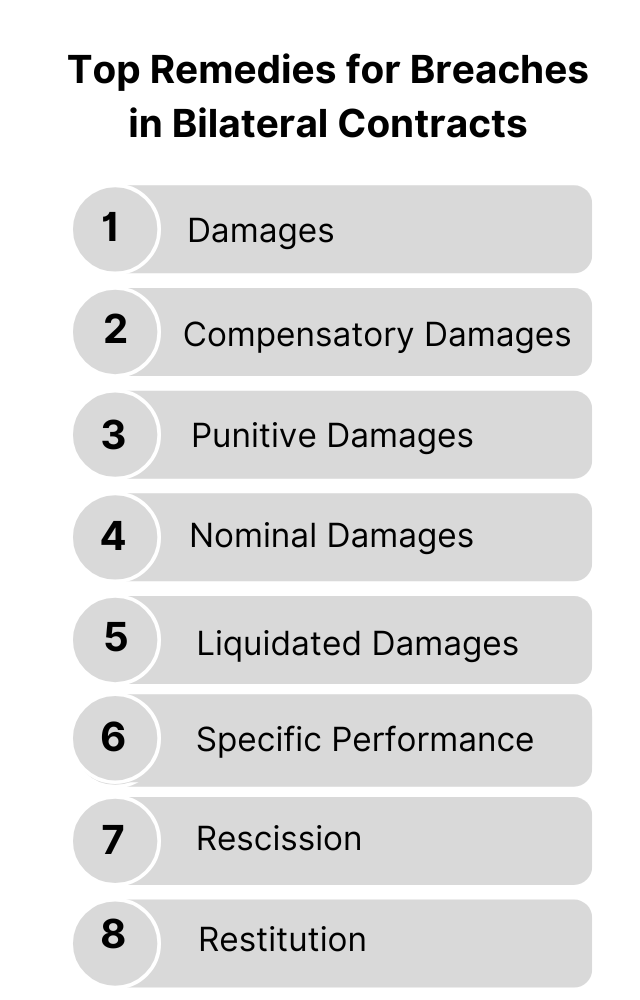
Enforcement and remedies in bilateral contracts are vital for maintaining the integrity of agreements and providing justice in breach situations. The legal system offers a range of remedies to address various types of breaches, ensuring that affected parties have avenues for redress. Understanding these remedies is crucial for anyone engaged in contractual agreements, as they provide means to resolve disputes and uphold contractual obligations.
In the intricate tapestry of commercial activities, bilateral contracts form the structural foundation, underpinning most business transactions. The enforcement of these contracts and the pursuit of appropriate remedies in case of breaches is not just a matter of legal theory but a practical and essential aspect of business operations. This extensive analysis explores the multifaceted significance of enforcement and remedies in bilateral contracts, emphasizing their role in risk management, business relationships, negotiation leverage, and market stability.
Foundation of Business Transactions
Bilateral contracts are ubiquitous in the business landscape, serving as the basis for a myriad of agreements, including sales, services, and employment. These contracts create a framework for cooperation and exchange, enabling businesses to engage in complex transactions with clarity and certainty. By outlining specific rights and obligations, they provide a structured approach to commercial dealings, ensuring that each party understands their responsibilities and expectations.
Risk Management
The enforcement mechanisms and remedies available in bilateral contracts serve as crucial tools for risk management. By clearly defining the consequences of breaches, these contracts allow businesses to anticipate potential issues and take proactive steps to mitigate them. This foresight is invaluable in business planning and decision-making, enabling companies to navigate the uncertainties of commercial transactions with greater confidence and preparedness.
In the intricate world of commercial interactions, the role of bilateral contracts in shaping and sustaining business relationships is profound. The enforcement of these contracts and the clear understanding of the consequences of breaches contribute significantly to the integrity and longevity of business associations. This 400-word discussion delves into how bilateral contracts foster trust, reliability, accountability, and effective conflict resolution in business relationships.
The Foundation of Trust and Reliability
The core of any business relationship lies in trust and reliability, elements that are fundamentally reinforced by the enforceability of bilateral contracts. When parties enter into a bilateral contract, they are not just agreeing to specific terms, but also establishing a foundation of trust. This trust is built on the understanding that each party is legally bound to fulfill their promises, and failure to do so will result in tangible consequences. The knowledge that a contract is not merely a set of guidelines, but a legally enforceable agreement, compels parties to adhere to their commitments, thereby fostering a relationship based on reliability.
Accountability and Responsibility
Mutual understanding in bilateral contracts creates an environment of accountability and responsibility. When parties recognize that their actions have legal implications, they are more likely to conduct themselves in a manner that upholds the contract’s spirit and letter. This accountability is crucial not just in fulfilling contractual terms but also in handling situations where disputes arise.
Effective Conflict Resolution
Despite the best intentions, disputes are an inevitable part of business relationships. Bilateral contracts provide a structured approach to conflict resolution, often including terms for dispute resolution processes like mediation, arbitration, or litigation. This structure helps in resolving disagreements without necessarily damaging the underlying business relationship.
The process of negotiating bilateral contracts is intricately tied to the understanding of enforcement mechanisms and the potential remedies available in the event of a breach. This knowledge significantly empowers the negotiating parties, equipping them with the insight necessary to forge agreements that are not only mutually beneficial but also legally sound and enforceable. Over 300 words, let’s delve into how this awareness shapes negotiation strategies and results in more effective and balanced contractual agreements.
Strategic Negotiations: A Balancing Act
Negotiations in bilateral contracts often resemble a complex dance, where each step is calculated and every move is strategic. Armed with the knowledge of enforcement mechanisms, parties approach negotiations with a heightened sense of caution, fully aware of the potential consequences should the contract be breached. This awareness shifts the negotiation dynamic, encouraging parties to consider not only their immediate needs but also the long-term implications of the agreement.
Preventive Lawyering: A Proactive Approach
Legal counsel plays a pivotal role in the negotiation of bilateral contracts, often referred to as ‘preventive lawyering’. Lawyers bring their expertise in contract law to the table, guiding clients through the complexities of contract terms and the nuances of enforcement mechanisms.
Market Stability
The broader impact of enforcement and remedies in bilateral contracts extends to the overall stability of the market. By ensuring that agreements are respected and upheld, these legal mechanisms contribute to a predictable and secure business environment, which is essential for the smooth functioning of commerce.
Modern Challenges and Adaptations
The complexity of modern business transactions often necessitates intricate bilateral contracts, posing challenges in drafting, negotiation, and interpretation. Technological advancements and globalization have introduced new dimensions to these contracts, necessitating adaptations in contract law and practice.
Best Practices in Contract Management
For bilateral contracts to effectively serve their purpose in commerce, certain best practices must be followed in their drafting, negotiation, and execution.
Bilateral contracts are more than mere legal documents; they are vital to the lifeblood of commerce, facilitating transactions, managing risks, and fostering relationships in the business world. Their importance is amplified in an era marked by rapid technological changes and globalization. Understanding the intricacies of bilateral contracts is imperative for senior business professionals, as these agreements are central to the strategy, operation, and legal health of businesses. As commerce continues to evolve, so too will the nature and application of bilateral contracts, reflecting the dynamic interplay between law, business, and technology.
Did you find this Legitt article worthwhile? More engaging blogs about smart contracts on the blockchain, contract management software and electronic signatures can be found in the Legitt Blogs section. You may also contact Legitt to hire the best contract lifecycle management services and solutions.