
In the world of business, contract disputes are inevitable. Whether it’s a misunderstanding over contract terms, a disagreement about performance, or a clash over payment issues, such contractual disagreements can...


In the world of business, contract disputes are inevitable. Whether it’s a misunderstanding over contract terms, a disagreement about performance, or a clash over payment issues, such contractual disagreements can be a substantial drain on time and resources. This article provides an in-depth look at two effective dispute resolution processes – mediation and arbitration – which can be instrumental in resolving contract disputes efficiently and effectively.
Contract disputes often arise from various disagreements between parties involved in a business agreement. They can stem from unclear or ambiguous language in the contract, resulting in different interpretations of terms and conditions. Additionally, disputes may occur when parties disagree over the performance of contractual obligations or when there are issues related to payments. These contract disputes, if not addressed and resolved timely and effectively, can escalate, leading to prolonged conflicts and legal battles.
Understanding the root causes of these contract disputes is the first step in resolving them. Whether it’s a lack of clarity in the contract’s wording, unmet expectations, or financial concerns, identifying the underlying issue is crucial. With this understanding, parties can then seek appropriate resolution methods. Mediation and arbitration offer pathways to resolve these disputes outside of traditional court litigation, providing more streamlined, cost-effective, and less adversarial alternatives. This article delves into the nuances of both mediation and arbitration, offering insights into how they can be strategically applied to resolve contract disputes, thereby minimizing their impact on business operations.
Read More: How to Handle Contract Terminations Properly
Mediation is a strategic approach to dispute resolution, wherein a neutral third-party known as the mediator assists disputing parties in reaching a mutually agreeable solution. This process is distinctly voluntary and collaborative, with the mediator playing a facilitative role rather than that of a decision-maker, unlike a judge or an arbitrator. The mediator’s role involves guiding the discussions, clarifying points of conflict, and helping the parties explore possible to resolve contract disputes.
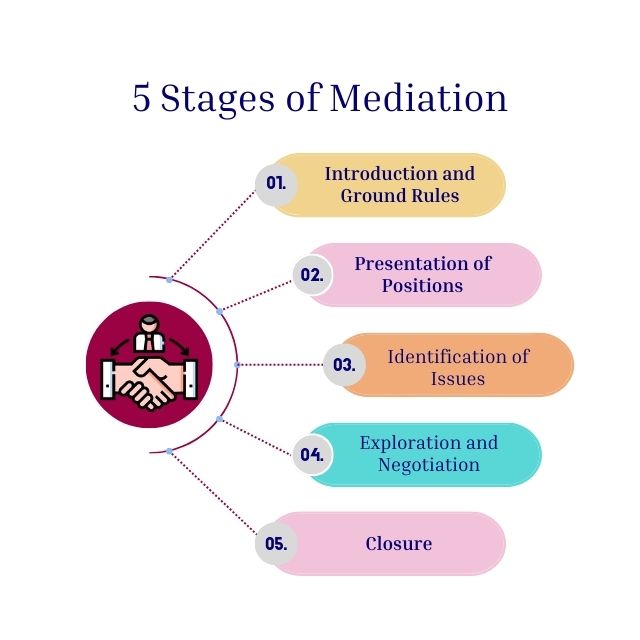
The Process of Mediation: The mediation process generally involves several key stages:
Read More: Signature Guarantee vs Notary
Mediation is an effective tool for resolving contract disputes, offering a flexible, cost-effective, and less adversarial alternative to litigation. By facilitating open communication and mutual understanding, it not only aids in resolving the current dispute but also often helps in preserving professional relationships and paving the way for future collaboration.
Arbitration is a widely-recognized dispute resolution technique where disputing parties seek a binding resolution from an impartial third party, known as an arbitrator. In contrast to mediation, arbitration ends with the arbitrator making a decision that usually has the same legal standing as a court judgment. This method is often selected for its efficiency and effectiveness in resolving conflicts.
The Process of Arbitration
Benefits of Arbitration
In conclusion, arbitration stands out as an effective method for resolving contractual and commercial disputes, particularly when parties desire a legally binding resolution but prefer to avoid the formalities and potential delays of court litigation. The process is marked by its flexibility, expertise-driven approach, and confidentiality, making it a suitable option for various types of business-related conflicts.

Choosing the right method for resolving contract disputes is a critical decision that can impact the outcome, cost, and the future of business relationships. When considering mediation and arbitration, several factors need to be weighed to determine the most suitable approach for a particular dispute.
Nature of the Dispute
Desired Outcome
Read More: Addendum vs. Amendment
Cost and Time Considerations
Read More: How to Create an Electronic Signature for Free
Other Considerations
In conclusion, choosing between mediation and arbitration depends on a careful analysis of the dispute’s nature, the desired outcome, cost considerations, and the impact on future relationships. Both methods offer valid paths to dispute resolution, each with its own strengths and suited to different scenarios. Parties should consider their specific situation and seek legal advice to make an informed choice.
Read More: How to Draft a Simple Contract
Contract disputes are an unavoidable aspect of doing business, but they don’t always have to end in litigation. Mediation and arbitration offer two distinct yet effective avenues for dispute resolution. Mediation emphasizes collaborative problem-solving, while arbitration provides a quicker, private alternative to court litigation. The choice between the two depends on the nature of the dispute, the relationship between the parties, and the desired outcome. Whichever method is chosen, it’s essential to approach dispute resolution with an open mind, clear communication, and a willingness to find a mutually beneficial solution.
Did you find this Legitt article worthwhile? More engaging blogs about smart contracts on the blockchain, contract management software and electronic signatures can be found in the Legitt Blogs section. You may also contact Legitt to hire the best contract lifecycle management services and solutions.
Mediation is a voluntary process where a neutral mediator helps disputing parties in a contract reach a mutually satisfactory solution through facilitated discussion, without imposing a decision.
Mediation is collaborative, confidential, maintains control over the outcome for the parties, preserves relationships, and is generally more cost-effective than litigation.
Arbitration is a process where disputing parties in a contract submit their disagreement to an arbitrator, who makes a binding decision, akin to a court judgment.
Arbitration is usually faster and more flexible than court litigation, offers confidentiality, allows choice of an expert arbitrator, and is generally less formal.
Arbitration is preferred when parties want a definitive decision, especially in cases involving complex legal issues or substantial financial matters.
Yes, if parties reach an agreement in mediation, it can be formalized in a written contract that is legally binding.
Yes, the decision made by the arbitrator in arbitration is typically final and legally binding, similar to a court judgment.
The choice depends on the nature of the dispute, desired outcome, cost considerations, and impact on future relationships. Complex legal issues may favor arbitration, while relationship preservation may favor mediation.
A mediator facilitates discussions, helps clarify issues, and guides parties towards a negotiated agreement, but does not make a binding decision.
Yes, both mediation and arbitration offer higher levels of confidentiality compared to court litigation, making them suitable for sensitive disputes.