
Contracts serve as the backbone of business transactions, providing a framework for parties to define their rights, obligations, and responsibilities. Within these contracts, various clauses play crucial roles in shaping...


Contracts serve as the backbone of business transactions, providing a framework for parties to define their rights, obligations, and responsibilities. Within these contracts, various clauses play crucial roles in shaping the agreement and delineating the parties’ intentions. Understanding the basics of contractual clauses is essential for navigating the complexities of contract negotiation, drafting, and enforcement.
In this comprehensive guide, we explore the key contractual clauses, their significance, and practical insights for effectively incorporating them into agreements. By gaining a deeper understanding of contractual clauses, businesses can enhance the clarity, enforceability, and effectiveness of their contracts, thereby fostering successful business relationships and mitigating risks associated with contractual disputes.
Contractual clauses are integral components of contracts, delineating the rights, obligations, and responsibilities of the parties involved. These clauses serve to allocate risks, establish parameters for performance, and provide mechanisms for resolving disputes. Understanding the common types of contractual clauses is essential for effectively negotiating, drafting, and enforcing contracts.
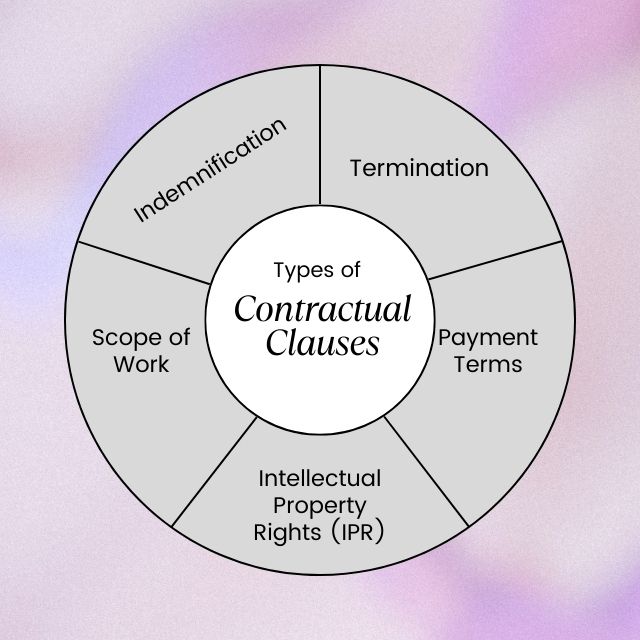
Contractual clauses serve as the building blocks of contracts, defining the rights, obligations, and responsibilities of the parties involved. Their importance cannot be overstated as they play a crucial role in clarifying the terms of the agreement, mitigating risks, and providing mechanisms for resolving disputes. Here’s a detailed exploration of the significance of contractual clauses:
Clarifying Rights and Obligations: Contractual clauses clearly outline the rights and obligations of each party, ensuring that both sides understand their roles and responsibilities under the agreement. This clarity helps prevent misunderstandings and disputes during the course of the contract.
Mitigating Risks: By incorporating specific clauses tailored to the needs and objectives of the parties, contracts can effectively mitigate various risks associated with the transaction. For example, indemnity clauses allocate financial responsibility for certain events, while limitation of liability clauses limit the extent of liability in case of breach or negligence.
Providing Mechanisms for Dispute Resolution: Disputes are inevitable in business transactions, but contractual clauses can provide mechanisms for resolving them efficiently. Arbitration clauses, for instance, specify that disputes will be resolved through arbitration rather than litigation, offering a faster and often more cost-effective means of resolution.
In summary, contractual clauses play a pivotal role in shaping the rights, obligations, and responsibilities of parties in contracts. By incorporating tailored clauses and following best practices for drafting and reviewing contracts, parties can enhance the clarity, enforceability, and effectiveness of their agreements, thereby fostering successful business relationships and minimizing the risk of disputes.

In conclusion, contractual clauses are essential components of contracts that define the rights, obligations, and responsibilities of the parties. By understanding the basics of contractual clauses and incorporating them effectively into agreements, parties can enhance the clarity, enforceability, and effectiveness of their contracts. With careful drafting, tailored clauses, and proactive risk management, contracts become valuable tools for facilitating successful business relationships and achieving mutually beneficial outcomes.
Did you find this Legitt article worthwhile? More engaging blogs about smart contracts on the blockchain, contract management software and electronic signatures can be found in the Legitt Blogs section. You may also contact Legitt to hire the best contract lifecycle management services and solutions.
Contractual clauses are provisions within a contract that address specific aspects of the agreement, such as rights, obligations, and dispute resolution mechanisms.
They clarify the parties' rights and obligations, mitigate risks, and provide mechanisms for resolving disputes in contracts.
A force majeure clause addresses unforeseen events or circumstances that may prevent parties from fulfilling their contractual obligations.
An indemnity clause obligates one party to compensate the other for losses, damages, or liabilities arising from specified events or breaches of the contract.
A confidentiality clause, or non-disclosure agreement (NDA), protects sensitive information exchanged between parties during the course of their business relationship.
A termination clause outlines the conditions under which either party may terminate the contract, including breaches of contract or changes in circumstances.
These clauses determine the jurisdiction in which disputes will be resolved and the governing law that will apply to the interpretation and enforcement of the contract.
Clauses should be tailored to the specific needs and objectives of the parties, drafted in clear, precise language, and periodically reviewed and updated.
Legal advice ensures that clauses comply with applicable laws and industry standards, enhancing their enforceability and effectiveness in contracts.
Natural disasters, wars, pandemics, and acts of terrorism are examples of force majeure events that may trigger the activation of a force majeure clause.
It obligates one party to compensate the other for losses, damages, or liabilities, thereby shifting the financial burden of specified events or breaches of contract.
Yes, termination clauses can be simple or complex, depending on the nature of the contract and the parties' preferences regarding termination conditions and procedures.
Breach of a confidentiality clause may result in legal consequences, such as monetary damages or injunctive relief, to prevent further disclosure of confidential information.
Jurisdiction and governing law clauses are generally enforceable, but their enforceability may be subject to certain legal considerations and public policy concerns in some jurisdictions.
Parties should draft clauses in clear, concise, and unambiguous language to avoid misunderstandings and disputes over interpretation.
Key terms may include definitions of terms, obligations, responsibilities, rights, remedies, limitations of liability, and dispute resolution procedures.
Periodic review ensures that clauses remain relevant, accurate, and reflective of the parties' current needs, circumstances, and changes in laws or regulations.
Yes, parties can negotiate contractual clauses to tailor them to their specific needs, objectives, and preferences regarding risk allocation and dispute resolution.
Parties should consider specifying termination conditions, notice periods, termination procedures, consequences of termination, and any termination fees or penalties.
Parties can effectively manage risks by carefully drafting contractual clauses, seeking legal advice, conducting due diligence, and negotiating terms that allocate risks appropriately and protect their interests.