
In the world of business and personal agreements, contracts act as the backbone of transactions and relationships. However, a contract, regardless of how well-drafted it may be, stands on shaky...


In the world of business and personal agreements, contracts act as the backbone of transactions and relationships. However, a contract, regardless of how well-drafted it may be, stands on shaky ground if it lacks a legal purpose. This article delves into the concept of the legality of purpose in contract law, its importance in ensuring a contract’s enforceability, and practical tips for individuals and businesses to secure their agreements.
Legality of purpose refers to the requirement that the subject matter of the contract must be legal and not against public policy. This fundamental principle is rooted in the notion that the law should not be used to enforce agreements that involve illegal activities or objectives that are considered harmful to society.
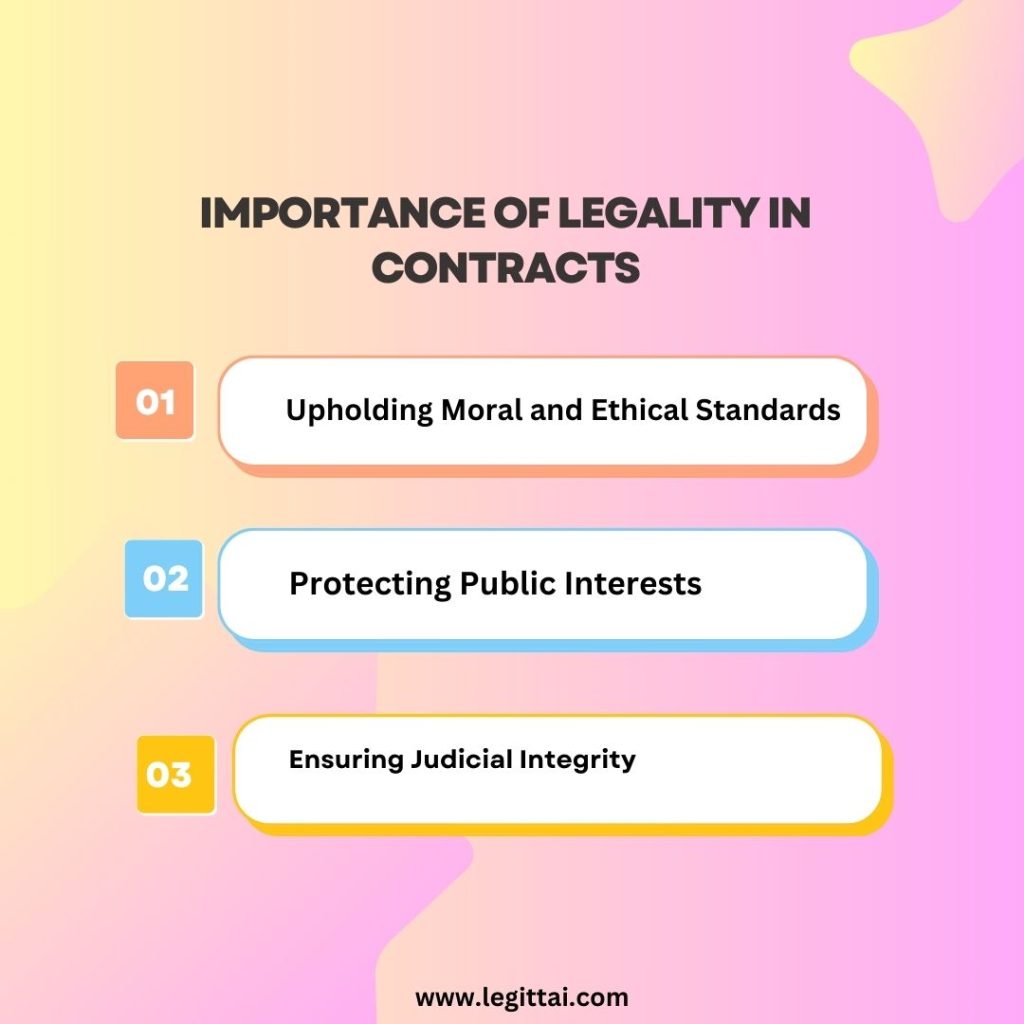
The legality of purpose serves several vital functions in the realm of contract law:
To understand the concept better, consider the following examples:
When drafting or entering into a contract, several steps can be taken to ensure legality:
Determining whether a contract’s purpose is legal can sometimes be challenging:
Case Study 1: Employment Contract with Non-Compete Clause
In many jurisdictions, non-compete clauses in employment contracts are subject to strict scrutiny. If the terms are overly restrictive, such as unreasonably long time frames or geographical areas, courts may deem them as against public policy and therefore unenforceable.
Case Study 2: Environmentally Harmful Agreements
Contracts that involve activities harmful to the environment, such as illegal dumping of waste, can be voided not only for breaking environmental laws but also for being against public policy regarding environmental protection.

The legality of purpose in contracts is a cornerstone of contract law, ensuring that agreements adhere to legal and ethical standards. Whether for businesses or individuals, understanding and adhering to this principle is crucial in securing enforceable contracts. Regular consultation with legal professionals, staying informed about changes in law and public policy, and drafting clear, specific contracts are key steps in safeguarding the legality and enforceability of agreements. As laws and societal norms evolve, so does the interpretation of what constitutes a legal purpose in contracts, making continuous vigilance and adaptation a necessity in contract management.
Did you find this Legitt article worthwhile? More engaging blogs about smart contracts on the blockchain, contract management software and electronic signatures can be found in the Legitt Blogs section. You may also contact Legitt to hire the best contract lifecycle management services and solutions.
The Legality of Purpose ensures contracts align with legal and ethical standards, making them enforceable and protecting parties involved from legal ramifications.
Contracts mandating illegal activities violate legal standards, rendering them unenforceable and potentially subjecting parties to legal consequences.
Contracts conflicting with societal norms or public welfare can be deemed unenforceable due to their adverse impact on public interest.
Fraudulent intent encompasses actions like concealment, misrepresentation, or exploitation aimed at deceiving the other party, invalidating the contract.
Illegal contracts can lead to financial losses, reputational damage, and wasted legal proceedings, impacting both parties involved.
Seeking legal counsel, using clear language, full disclosure, and compliance with formalities help ensure contract legality and enforceability.
No, contracts must align with public policy to be enforceable, as agreements against public welfare or societal norms are void.
Contracts involving stolen goods, non-disclosure of safety hazards, or discriminatory practices violate legal standards and are unenforceable.
Fraudulent intent undermines the validity of contracts, as actions like concealment, misrepresentation, or exploitation taint the agreement's integrity.
Understanding the legality of purpose helps parties craft enforceable contracts, protecting their interests and ensuring compliance with legal and ethical standards.