
In the digital age, the adoption of electronic signatures (e-signatures) has revolutionized the way contracts are executed. E-signatures offer a convenient, efficient, and legally binding way to sign documents, streamlining...

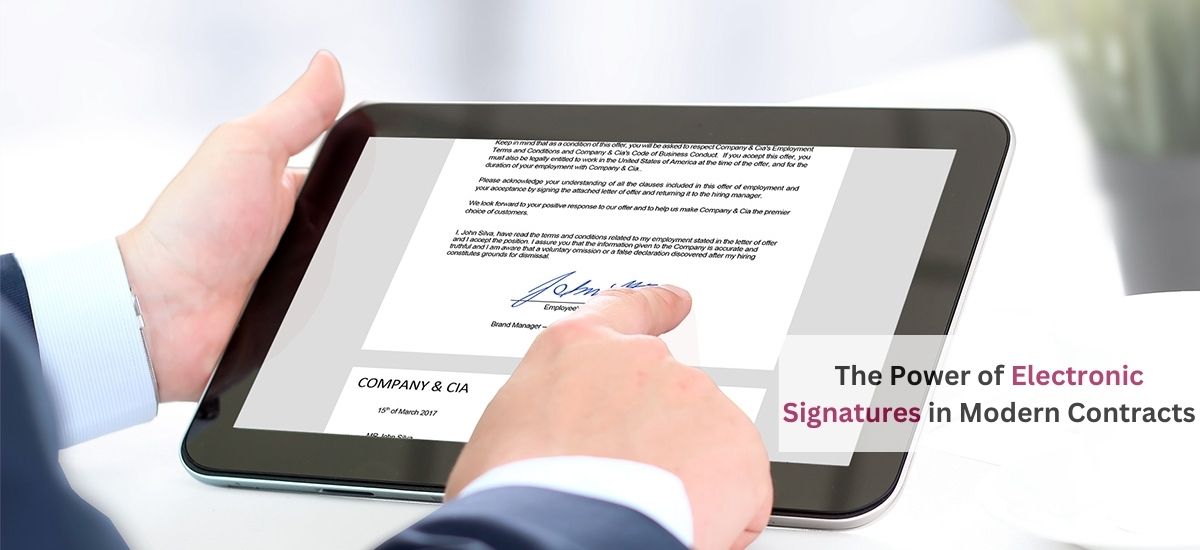
In the digital age, the adoption of electronic signatures (e-signatures) has revolutionized the way contracts are executed. E-signatures offer a convenient, efficient, and legally binding way to sign documents, streamlining contract management processes in various industries. This article explores the power of e-signatures in modern contracts, examining their legal validity, advantages, challenges, and impact on business practices.
An electronic signature is an electronic process or symbol attached to a contract, used to sign that document. They range from digitized versions of handwritten signatures to typed names, clicked buttons, or encrypted digital signatures. The fundamental purpose is to provide a secure and verifiable method of consenting to a document.
E-signatures gained legal recognition through statutes like the U.S. Electronic Signatures in Global and National Commerce Act (ESIGN) and the Uniform Electronic Transactions Act (UETA). Globally, laws such as the EU’s eIDAS (Electronic Identification, Authentication, and Trust Services) regulation have also standardized their use. These laws ensure e-signatures have the same legal standing as traditional handwritten signatures.
Also Read: How to Create an Electronic Signature for Free
E-signatures have been widely adopted across various sectors including legal, finance, real estate, and healthcare. They are particularly useful in contract management, HR processes, and government services.

While widely accepted, e-signatures still face legal challenges in some jurisdictions and scenarios. It’s crucial for businesses to understand the legal framework in their specific region and industry. Compliance with international standards is also vital for cross-border transactions.
The use of e-signatures is expected to grow, driven by advancements in technology and a shift towards digital business practices. Future trends may include greater integration with blockchain technology for enhanced security and the use of artificial intelligence to streamline the signing process.
Also Read: How to Sign a PDF Document
E-signatures represent a significant advancement in the way contracts are executed in the modern world. They offer a blend of efficiency, security, and cost-effectiveness, making them a vital tool for businesses and individuals alike. As technology continues to evolve, the role of e-signatures in contract management and other areas is set to grow, further transforming business practices and contributing to a more sustainable and efficient digital future. The adoption of e-signatures underscores the shift towards a more interconnected and digital-centric business environment, where agility and security are paramount.
Did you find this Legitt article worthwhile? More engaging blogs about smart contracts on the blockchain, contract management software and electronic signatures can be found in the Legitt Blogs section. You may also contact Legitt to hire the best contract lifecycle management services and solutions.
An electronic signature, or e-signature, is an electronic symbol or process attached to a contract, used as a method of signing that document.
Yes, e-signatures are legally binding in many jurisdictions, thanks to laws like the U.S. ESIGN Act and the EU’s eIDAS regulation.
E-signatures offer efficiency, convenience, cost-effectiveness, enhanced security, and environmental sustainability by reducing paper use.
Yes, e-signatures are widely used in international contracts, but it’s important to ensure compliance with the legal standards of each involved jurisdiction.
E-signatures generally offer enhanced security with features like encryption and tamper-evident seals, but they also require robust cybersecurity measures to protect against digital threats.
E-signatures are commonly used across various sectors, including legal, finance, real estate, healthcare, and government services.
E-signatures reduce the need for paper, thus contributing to environmental sustainability by decreasing deforestation and carbon emissions from paper production and transport.
Yes, integrating e-signatures with blockchain technology can enhance security and transparency, offering a decentralized and tamper-proof solution.
Challenges include navigating legal and compliance issues, overcoming technological barriers, and addressing security concerns in the digital environment.
The use of e-signatures is expected to grow, driven by technological advancements and the increasing shift towards digital business practices.